Deep Blue Organ Trio Rar
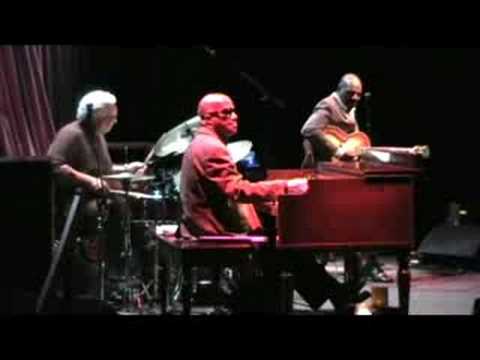
The Deep Blue Organ Trio began officially performing under that moniker in 2000, even though Hammond B-3 organist Chris Foreman, drummer Greg Rockingham, and guitarist Bobby Broom had known each other since the '80s, playing clubs around their hometown of Chicago. Consistently crossing each others' paths, they eventually gigged around the Windy City as a unit, while individually, backing up jazz and blues legends including Hank Crawford, Albert Collins, Nat Adderley, Kenny Burrell, Charles Earland, Sonny Rollins, Miles Davis, Art Blakey, Stanley Turrentine, and Kenny Burrell.
Deep Blue Organ Trio Rar Download
By 2001 the trio successfully began to assert their musical mission of bringing the jazz organ trio format into the new millennium. Steeped not only in organ jazz, the trio mixes funk, soul, R&B, gospel, and spirituals into the collective mix. The Deep Blue Organ Trio released their first album on Delmark, Deep Blue Bruise in 2004.The follow up, Going to Town: Live at the Green Mill was recorded live during their weekly Tuesday nights at Chicago's Green Mill Lounge, their steady gig since 2003.
A DVD of the show was released in tandem with the CD. Al Campbell.
Bill Perkins was one of the quiet lions of West Coast jazz, soft-spoken, humble and gentle in conversation, but capable of raising the roof onstage. Fated to love you taiwanese vs korean. On tenor sax, like many of his contemporaries, he channeled the spirit of Lester Young.
On soprano sax his tone was more angular, hard-bitten, leaning almost towards the avant-garde. He was an electrical whiz who held patents on two synthesized wind instruments, and a kindly mentor who wouldn’t hesitate to take time after a gig to talk shop with younger players. “Perk” was one of the most unique and beloved icons of West Coast jazz, yet one who always wore the “icon” label with unease. William Reese Perkins was born in San Francisco on July 22, 1924. His first instrument was the clarinet, which he abandoned at fifteen in favor of the tenor sax.
His father, a mining engineer, died while Bill was still in his teens. His mother continued to raise him in Santa Barbara, where Perkins’ interests were torn between engineering and music. He split the difference, studying electrical engineering at Cal Tech and music at Westlake College and U.C. Santa Barbara, all thanks to the G.I. Perkins’ first regular professional gig was with Jerry Wald’s band in Los Angeles. In May 1951 he joined the Woody Herman band, which gave him his first major exposure. In fact, his initiation into the Herman Herd was like being thrown into the fire: Herman’s manager called in the middle of a performance at the Palladium and practically begged Perkins to come down and replace a tenorman who had just been fired.
His interest in the “Prez tone” helped him fit in with Herman’s other Lester Young acolytes, and he made several impressive records with the Third Herd including “Ill Wind”. In 1953 Perkins and his fellow tenorman Richie Kamuca moved from Herman’s band to the Stan Kenton aggregation. Both men made the adjustment from upbeat bop to Kenton’s more cerebral sounds with ease.
“Yesterdays” became Perkins’ signature tune with the band, demanded perhaps more than any other piece in the catalog. He also began doing sideline gigs with fellow Kentonians, including Shorty Rogers’ popular Giants.
Perkins also worked with pianist John Lewis, altoman Art Pepper, vibraphonist Terry Gibbs’ Dream Band, and other projects. His first sessions as a leader came in 1956 (“The Bill Perkins Octet on Stage”, on Pacific Jazz). The 1960s saw two radical changes in Perkins’ career. First, he began working regularly as a recording engineer when jazz gigs began to get more scarce.
More significant in his playing career was his embracing of the new sounds being explored by Sonny Rollins and John Coltrane. Few of Perkins’ associates on the West Coast shared his enthusiasm, but he began assimilating new elements into his own style, particularly on soprano sax. He landed occasional film work, including a job with Duke Ellington’s band on the soundtrack of Frank Sinatra’s now-overlooked “Assault on a Queen”. In 1969 Perkins gave up the road in favor of full-time studio work, joining Doc Severinsen’s Tonight Show Band where he remained for almost a quarter-century. For most of the 1970s he worked with the Toshiko Akiyoshi-Lew Tabackin Big Band and Bill Holman’s group, and occasionally returned to Woody Herman’s side for special projects.
Shorty Rogers remained a close cohort until the trumpeter’s death; the two friends continued to work together in the Lighthouse All-Stars in the 1980s and 90s. Perkins moved from the baritone sax chair to cover the All-Stars tenor parts following Bob Cooper’s sudden death in 1993. Always content to operate under the direction of others, Perkins did not record that frequently as a leader. The 1966 date “Quietly There”, with Victor Feldman on piano, organ and vibes, retains much of its charm in hindsight. His patented sax-synthesizer can be heard on 1984’s “Journey to the East”. In 1990 he recorded “I Wished on the Moon” with the Dutch Metropole Orchestra, a disc which was soundly applauded by his ardent fans, and followed up with his own band on “Our Man Woody” the following year.
The forward-looking “Frame of Mind” (1993, Interplay) was one of the finest recordings of his career, and in ’95 he paid homage to a lifelong influence on “Perk Plays Prez” (Fresh Sound). Duke Ellington was extraordinarily generous in allowing members of this band to record on their own while working for him. This generosity is something we all should be grateful for. Otherwise we would never have experienced the pleasure of hearing small groups headed by Johnny Hodges, Barney Bigard and Rex Stewart.
This album was originally recorded by a group of Ellington stalwarts in 1958 for Germany's Bertelsmann Record Club. It was finally issued in the US on CD by RCA Victor last year as part of that label's Classic Edition series. During this time, Ellington was on an extended European tour that took him to England, Norway, France, Sweden and Holland. The C-Jam All Stars had Clark Terry, Paul Gonsalves, Jimmy Woode and Sam Woodyard. But instead of Ellington sitting in on piano, a local pianist of no small skill, Carlos Diernhammer, was called upon. He wasn't only an accomplished pianist, but a composer as well. One of his more notable writing achievements was the score for the German cult horror film The Death Ray of Dr.
The play list is a mix of Ellington pieces, a couple of standards and five tunes written by Terry or Gonsalves. The latter are little more than blues based head arrangements serving as the platform for the solo artistry each member of the group. All good stuff. But it's the more familiar material which catches the ear.
Gonsalves does his thing with 'Diminuendo and Crescendo in Blue'. While not approaching the 27 choruses of the1956 Newport Jazz Festival performance, he continues to generate sparks showing no signs of ennui which might have set in because of the many times he had to play the tune because of Newport. 'I Cover the Waterfront' is enhanced by a lovely Terry muted trumpet sequing into a soft melodic tenor by Gonsalves which makes this track especially appealing. But soloing is not the only good thing on this set. There's some outstanding, up beat ensemble playing as on 'It Don't Mean a Thing (if It Ain't Got That Swing)'.
There is always something special about the rhythm support of Woode and Woodyard. Their long association with Ellington gave these players the ability to anticipate just what each soloist's move was going to be during their extended extemporizations. This familiarity allowed them to smoothly meet the needs of the instrumentalists. Withhis instrumental hit 'Honky Tonk' in February 1956, Bill Doggett (bornWilliam Ballard Doggett) created one of rock's greatest instrumentaltracks. Although it generated scores of offers to perform in rock &roll clubs throughout the United States, Doggett remained tied to thejazz and organ-based R&B that he had performed since the 1930s.Continuing to record for the Cincinnati-based King label until 1960, hewent on to record for Warner Brothers, Columbia, ABC-Paramount and Sue.His last session came as a member and producer of an all-starjazz/R&B group, Bluesiana Hurricane in 1995.

Born on the north sideof Philadelphia, Doggett struggled with poverty as a youngster. Althoughhe initially dreamed of playing the trumpet, his family was unable toafford lessons. Persuaded by his mother (a church pianist), to trykeyboards instead, he quickly mastered the instrument. Hailed as a childprodigy by his 13th birthday, he formed his first band, the FiveMajors, at the age of 15.
Performing with the Jimmy Gorman Band, the pitorchestra at the Nixon Grand Theater, while still in high school,Doggett assumed leadership of the group in 1938. The experience wasbrief, however, as Doggett sold the orchestra to Lucky Millinder, withwhom he continued to work off and on for the next four years.
He madehis recording debut on Millinder's tracks, 'Little Old Lady FromBaltimore' and 'All Aboard' in 1939. Although he formed a short-livedorchestra with Benny Goodman's arranger, Jimmy Mundy, in late 1939,Doggett continued to work primarily as a sideman. Playing piano andarranging for the Ink Spots from 1942 until 1944, he went on to arrangetunes for Count Basie's band and tour and/or record with ColemanHawkins, Johnny Otis, Wynonie Harris, Ella Fitzgerald and LionelHampton. Replacing Wild Bill Davis in Louis Jordan's band, in 1947, heappeared on the influential tunes, 'Saturday Night Fish Fry' and 'BlueLight Boogie.' He made his debut as an organist during June 1951recording sessions with Ella Fitzgerald.
Debuting his own organ-ledcombo at New York nightclub, the Baby Grand, in June 1952, Doggettrecorded more than a dozen singles before striking gold with 'HonkyTonk' four years later. A longtime resident of Long Island, New York,Doggett died on November 13, 1996, three days after suffering a heartattack. Craig Harris. This is the first of two super session albums that Chess produced in the late '60s.
Time has been a bit kinder to this one, featuring Muddy, Bo Diddley and Little Walter, than the one cut a year later with Howlin' Wolf standing in for Walter. It's loose and extremely sloppy, the time gets pushed around here and there and Little Walter's obviously in bad shape, his voice rusted to a croak and trying to blow with a collapsed lung. But there are moments where Bo's heavily tremoloed guitar sounds just fine and the band kicks it in a few spots and Muddy seems to be genuinely enjoying himself. Granted, these moments are few and way too far between, but at least nobody's playing a wah-wah pedal on here.