Police Sketch Artist Software
“The woman said she was there in the maternity waiting room. She said the image they put on the television, the computer composite, looked like a white woman,” Birdwell recalled.The suspect — later identified as Rayshaun Parson, who was sentenced to 20 years in prison for the kidnapping – was black. She had been caught within 24 hours of Birdwell’s sketch going out.When digital devices fail to deliver, police still turn to the organic alternative of paper, pencil and a personal touch that a forensic sketch artist offers. It’s a skill that artists say has been drawn on less and less in a world where surveillance and cellphone cameras are ubiquitous, and computer programs can be cost-saving measures. Birdwell's police sketch was done with the help of a witness in the 2007 kidnapping of a young girl from a Lubbock, Texas, hospital. Rayshaun Parson was arrested within 24 hours of the sketch going out.“They’ve been calling this a dying art for years,” said Idaho sketch artist Carrie Stuart Parks, who trains law enforcement with her husband, Rick, a forensic artist with the FBI for 13 years.
“It may be changing, but with what we do, you don’t have to worry about technology and having computers and programs that go outdated within a year.”. Authorities in Somerset County, N.J., released a sketch in December of a man (l.) who assaulted an elderly couple. In 2008, the Washington County Sheriff’s Office in Oregon released a sketch of a man (r.) wanted for robbing an elderly man at gunpoint.

Somerset County’s Prosecutor’s Office, Washington County Sheriff’s OfficeThe FBI does have 11 so-called visual information specialists, but a training course that began in 1984 to help sketch artists hone their skills was suspended in 2010 because of a “reallocation of resources,” an agency spokeswoman said. Nationwide, there are fewer than 100 full-time forensic sketch artists working in about 40 forensic units in law enforcement or at missing persons groups, said Birdwell, who chairs the Forensic Art Subcommittee for the International Association for Identification. That number has stayed relatively consistent.Sexual assaults and aggravated robberies are the most common cases for sketch artists, she added. Smaller departments will usually call on her for the bigger cases, such as homicide or serial rape, although major cities can employ sketch artists for smaller crimes.The International Association for Identification offers courses and certification, although it isn’t a requirement for a forensic artist to be certified or go through a required number of training hours. “It’s important for police agencies to embrace technology.

They need to get more bang for their buck in these economic times.”While surveillance cameras have helped immensely in capturing suspects, they aren’t reliable on their own, Birdwell said. Sometimes, the images are fuzzy or catch only a partial view. Portland, Ore., police released sketches over the past year looking for a flasher (l.) and in a separate incident, of a man who stabbed a bus driver (r.). Portland Police BureauBirdwell said she’s wary of computer composites that end up looking like photos, potentially presenting an image that doesn’t allow for public interpretation.But Michael Streed, who works as the only full-time sketch artist with the Baltimore Police Department, said software technology is gaining ground in the industry precisely because most departments can’t justify having a full-time artist on staff. With his experience, he created the computer software in 2009, and says about two dozen departments now use it.“We can train anyone, all the way from the janitor to the police chief, to use our tool,” said Streed, a former cop in Southern California. “The software supplements their skills and allows the agency to leverage the artist’s time. Otherwise, it can take a number of years and thousands of dollars in travel and tuition costs just to train one person.” “They’ve been calling this a dying art for years.'
Streed said he doesn’t think using a software program would be any less effective in helping the public identify criminals. Departments don’t generally keep track of how often sketches lead to an arrest — and ultimately, a conviction.“It’s important for police agencies to embrace technology,” Streed said.
“They need to get more bang for their buck in these economic times.”. A sketch released in January 2014 of a suspect wanted in two robberies in Paris, Texas, went viral for its cartoonish features. Police apprehended Glenn Edwin Rundles, 32.
Portrait Pad For Mac
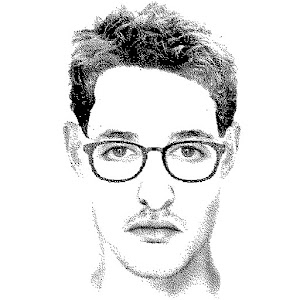
Lamar County Sheriff's OfficeThe sheriff’s department said they didn’t intend for the picture to be mocked, and said it was drawn based on the description provided by the victims.Despite the sketch’s cartoonish quality, Texas authorities made an arrest in the case following its release.“It really kind of got under our skin that people were making fun of it,” said Lamar County Chief Deputy Jeff Springer. “But it served its purpose to us.”. “For a young person, the head is larger than the face, and she had buck teeth, which means her mouth (in the sketch) had to be partially open,” Philios said. “That had to be changed.”Finally, last October, there was a break. The NYPD had reopened the case, and thanks to a tip, Baby Hope was identified as 4-year-old Anjelica Castillo. A family cousin confessed to her brutal murder, police said.Philios, who felt relief after hearing the case was cracked, said that sketch artists can still be assets. He estimated drawing up more than 200 sketches, mostly of wanted criminals, over his 15 years as an artist.“That’s the thing,” he said about an artist’s advantage, “you can draw anything.”.